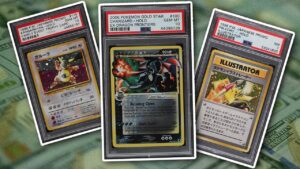
Choosing the best Pokémon cards to buy for long term value requires more than guessing, hype chasing, or copying what everyone else is purchasing. Smart collectors and investors approach Pokémon card buying with patience, strategy, research, and an understanding of how rarity, condition, historical relevance, and market behavior influence long term worth.
This in-depth investment guide is not about short term flipping or random speculation. It is designed to help serious collectors understand what truly holds value over time, what drives appreciation, and how disciplined selection leads to stronger long term outcomes. When combined with structured and transparent auction platforms like BidZoo, buyers gain a safer and more informed ability to pursue premium Pokémon cards with confidence.
1. Original Base Set Holographic Cards

Original Base Set holographic cards represent the very beginning of the Pokémon trading card era, which launched in the late 1990s and marked the franchise’s first step into collectible card gaming. These cards capture a sense of origin, nostalgia, and historical importance, coming from a time when the hobby itself was just taking shape. Because they were part of the earliest releases, they carry emotional and collectible weight that newer sets simply cannot replicate, making them enduring touchstones for both long-time collectors and newer fans drawn to the roots of the hobby.
How This Card Collection Appears
Here is a breakdown of what these cards look like:
1. The Holographic Treatment
Unlike modern “Reverse Holo” cards where the entire card surface shines except for the art, vintage Base Set cards feature the holographic pattern exclusively on the character artwork window. This “foil” effect is typically a starry or “starlight” pattern that reacts to light when the card is tilted
2. Visual Identifiers for Investment Variants
There are three distinct “looks” for these cards that determine their value:
- 1st Edition Shadowless: These feature a circular “Edition 1” stamp on the left side of the card, just below the art frame. Critically, the rectangular frame holding the character art lacks a drop shadow on its right and bottom edges, giving it a “flat” or “2D” appearance.
- Shadowless (Non-1st Edition): These look identical to 1st Edition cards but lack the “Edition 1” stamp. They still have the characteristic “flat” art frame with no drop shadow.
- Unlimited: These are the most common versions. They feature a prominent drop shadow on the right side of the art frame to create a sense of depth and usually have a slightly darker blue or red border depending on the Pokémon’s type.
3. Card Layout and Text
- The “Big Three” Design: Iconic cards like Charizard #4, Blastoise #2, and Venusaur #15 feature hand-drawn art rather than the CGI styles often seen in modern sets
- Red “HP” Text: On Shadowless and 1st Edition variants, the “HP” text (Hit Points) is often printed in a thinner, red font, whereas later Unlimited versions transitioned to a bolder style.
- Set Symbol: Interestingly, the Original Base Set is the only “landmark” expansion that has no set symbol located on the right side of the card under the artwork. If you see a symbol there (like a jungle flower or a fossil), it is not from the Base Set.
Why This Collection Is Special
These vintage Base Set holographic Pokémon cards are considered among the best long-term investments in the Pokémon TCG for several reasons.
Original Base Set holographic cards (1999) represent the “Gold Standard” of the hobby. As the very first English release, they capture a sense of origin and historical importance that newer sets cannot replicate. For those looking to invest in Pokémon cards that hold their value, the “Shadowless” variants (which lack a drop shadow on the art frame) are particularly prized for their short print run and distinct visual appearance compared to the common “Unlimited” prints.
Proven Market Strength
- The 17,000,000% Gain: Academic research highlights that a 1st Edition Base Set Charizard has seen a cumulative appreciation of roughly 17,000,000% since 2004.
- Benchmark Valuation: High-grade examples, such as the PSA 10 1st Edition Shadowless Charizard, have reached valuations of $420,000, effectively setting the price ceiling for rare Pokémon cards in the vintage market.
- Recession Resistance: During market corrections, vintage Base Set indices consistently outperform modern indices, acting as a “safe haven” asset.
Unique Value Factors & Risks
- The “Big Three” Factor: Charizard, Blastoise, and Venusaur form a “trifecta” of value. Collectors often strive to own all three, creating structural demand that supports the price of the entire group.
- Risk/Advice: Watch out for “Unlimited” prints being sold as “Shadowless.” The absence of the shadow is the critical value driver. Always verify the “Edition 1” stamp and the shadowless border before paying a premium.
Bottom Line
Vintage Base Set holographic cards are among the best Pokémon card investments because they combine:
✔ Historical importance
✔ Cultural nostalgia
✔ Real scarcity
✔ Strong collector demand
✔ Proven long-term price growth
These cards are the foundational pillars of Pokémon history. Their cultural permanence makes them the best Pokémon cards to buy for any foundational portfolio.
Strategic Analogy:
An Original Base Set Holo is like historic land in a major city’s center. The “Extra Value Boosters” are the equivalent of zoning laws and historical preservation status. While you can build many new luxury condos (Modern Cards) nearby, the limited supply and permanent prestige of the “historic land” ensure that its value is boosted by the very fact that no more of it can ever be created.
2. Charizard Cards From Key Eras

Why This Collection Is Special
Charizard is the “cultural cornerstone” of the franchise and acts as a valuation multiplier. Almost any set featuring a high-rarity Charizard sees that card become the most valuable asset in the box. From the 1999 Base Set to the “Crystal” types of 2003, this species represents the blue-chip anchor of the Western market. Investors prioritize these because Charizard has the deepest and most liquid market, making it a top choice when you invest in Pokémon cards.
Sample List of Charizard Cards From Key Eras
- 1st Edition Base Set Charizard #4
- Blaine’s Charizard #2
- Charizard Legendary Reverse
- Charizard Holo Expedition #6
- Charizard GX SV49 (Hidden Fates)
- Charizard Celebrations 4/102
- Charizard VMAX #020 (Darkness Ablaze)
- Mega Charizard X ex (MEGA Dream ex)
Proven Market Strength
- Market Cap Dominance: The total market capitalization of PSA 10 1st Edition Charizards exceeds $68 million (comparable to the GDP of Tuvalu).
- The Premium Effect: Data consistently shows Charizard cards trade at roughly 3x the price of equal-rarity peers. For instance, the Charizard Gold Star is valued significantly higher than the Mew Gold Star from the same set.
- Modern Growth: Even modern cards like the Special Delivery Charizard saw a 500% appreciation in just two years, proving the “Charizard effect” applies to new releases too.
These Charizard cards are favored by investors because they combine proven financial performance, extreme condition scarcity, cultural significance, and strong macroeconomic tailwinds, positioning them among the most reliable long-term assets in the Pokémon market.
3. Modern Market Resilience
- Limited modern releases show rapid appreciation driven by “Charizard hunters.”
- Special Delivery Charizard increased roughly 500% in two years, from $50 to $300.
- Modern grails like Charizard ex (Pokémon 151) benefit from strong aesthetics combined with original Kanto nostalgia.
4. Psychological and Economic Drivers
- Demand is fueled by nostalgia economics, as Millennials and Gen Z reach peak earning power.
- Major franchise anniversaries historically trigger 30%–50% price surges in iconic assets.
- High-end vintage Charizards are viewed as stores of value, largely insulated from reprint risk and modern hype cycles.
These cards are not speculative hype. They are established blue-chip collectibles in the Pokémon card world.
Unique Value Factors & Risks
- Condition Scarcity: Later Charizard cards (like the EX Dragon Frontiers Gold Star) feature black edges or silver borders that chip extremely easily. A PSA 10 copy is exponentially rarer than a PSA 9 due to these production sensitivities.
- The 30th Anniversary Catalyst: As the face of the franchise, Charizard is expected to be the primary beneficiary of the 2026 anniversary “nostalgia boom.”
Bottom Line
This rare Charizard collection represents some of the best Pokémon cards to buy because they offer:
✔ Cultural prestige
✔ Historical significance
✔ True rarity
✔ Strong collector demand
✔ Reliable long-term investment potential
Charizard represents prestige collecting. Owning a powerful Charizard card symbolizes status in the hobby, making it one of the best Pokémon cards to buy for liquidity and proven historical growth.
Strategic Analogy:
Owning a top-tier Charizard is like owning historic real estate at the city center. New developments may rise around it, but infrastructure booms and global attention always drive the greatest gains to the permanently limited original land.
3. Limited Edition Promo and Event Exclusive Cards

Limited Edition Promos and Event Exclusive cards includes assets ranging from historical “holy grails” to modern retail collaborations. These cards are highly valued by investors because they often have a permanently fixed supply, providing immunity to the reprinting risks that affect standard booster set cards
These cards are special Pokémon cards that were never mass-produced, never sold in packs, and can’t be reprinted.
This display of rare Pokémon promo cards clearly represents some of the best Pokémon cards to buy for collectors and long term investors. The image shows a secure glass case presentation, with each promo card carefully graded, sealed, and supported by official certificates in the background. This immediately communicates authenticity, rarity, and serious collector prestige.
Sample List of Limited Edition Promo and Exclusive Cards
- Pikachu Illustrator
- Mario Pikachu #294/XY-P
- Luigi Pikachu #295/XY-P
- Team Skull Pikachu #013/SM-P
- Pikachu Munch Exhibition
- Pikachu with Grey Felt Hat
- Red’s Pikachu #270/SM-P
- Pikachu P #229/BW-P
- Pikachu Trainer No. 2 (1998 Mega Battle)
- Pikachu Trainer No. 3 (1998 Mega Battle)
- Yokohama’s Pikachu #282/SM-P
- Pretend Magikarp Pikachu #150/XY-P
- Pretend Gyarados Pikachu #151/XY-P
Why This Collection Is Special
These cards were never sold in packs; they were awarded through tournaments, contests, or exclusive partnerships. This gives them a permanently fixed supply that cannot be diluted by reprints. From the “Holy Grail” Pikachu Illustrator (an estimated population of ~39–40 copies worldwide) to the Mario Pikachu collaboration, these assets are valued for their absolute scarcity, ranking them among the most rare Pokémon cards in existence.
Proven Market Strength
- Veblen Good Status: Top-tier promos function as Veblen goods, where higher prices increase desirability. The Pikachu Illustrator reached a valuation of $5.275 million, establishing it as the ultimate store of value.
- Parabolic Growth: Japanese exclusive promos, such as the Mario Pikachu (2016), surged from ~$1,500 to nearly $20,000 in PSA 10, outperforming almost all standard retail releases.
Unique Value Factors & Risks
- Immunity to Reprints: Unlike set cards, tournament promos are historical artifacts. They cannot be reprinted because the event they are tied to (e.g., “1998 Mega Battle”) is over.
- Risk/Advice: Provenance is key. For high-end tournament cards, ensure the card has a documented history or certification, as counterfeits for these ultra-rare items are a real risk.
Bottom Line
Limited Edition Promo and Event Exclusive Pokémon cards represent some of the best Pokémon cards to buy because they offer:
✔ Naturally limited supply
✔ Built-in scarcity from special releases and events
✔ Strong historical and emotional storytelling
✔ Authentic exclusivity that cannot be recreated
✔ Consistent long-term collector demand
Promo cards are “sovereign assets” with a hard supply cap. They offer the strongest protection against market dilution and are ideal for investors seeking true rarity.
Strategic Analogy:
Standard set cards resemble luxury condos, valuable but abundant. Limited Edition Promos are more like historic monuments: they cannot be recreated, their supply is fixed forever, and their value is inseparable from Pokémon history itself.
4. First Edition Holos From Recognized Sets

This close up display of First Edition stamped holographic Pokémon cards in mint condition cases represents some of the best Pokémon cards to buy for collectors and serious investors. The image showcases iconic cards like Charizard, Blastoise, Venusaur, and Mewtwo, all preserved in high grade PSA cases with clear First Edition markings. This instantly signals rarity, authenticity, and premium collector value.
Sample List of First Edition Holos Cards (by Rarity Tier):
Tier 1 — Crown Jewel / Ultra-Scarce
- 1st Edition Base Set Charizard (Shadowless)
- Crystal Charizard – Skyridge
Tier 2 — Legendary Anchors
- Lugia – 1st Edition Neo Genesis
- Shining Charizard – Neo Destiny
Tier 3 — Foundational Blue-Chip Starters
- Venusaur – 1st Edition Base Set (Holo)
- Blastoise – 1st Edition Base Set (Holo)
Why This Collection Is Special
The “Edition 1” stamp is the ultimate signal of early adoption. These cards come from the very first print runs of vintage sets (Base Set, Jungle, Fossil, Neo Genesis), making them significantly scarcer than the “Unlimited” prints that followed. For those seeking to invest in Pokémon cards with pedigree, the stamp validates the card as the “original” version of a childhood memory.
Investors value these assets because they represent a permanently capped supply meeting consistent, cross-generational demand. Unlike modern sets that face high reprint risks, the number of unopened booster boxes from the 1999–2003 era is extremely small and prohibitively expensive, ensuring that the existing graded population is largely “condition-locked”. Furthermore, the peak earning power of Millennials and Gen Z is currently being directed toward these specific cultural connections, a phenomenon known as “nostalgia economics
Proven Market Strength
- Historical Outperformance: Select First Edition blue-chips have appreciated by more than 3,000% over a 20-year horizon.
- The Multiplier: A First Edition stamp typically multiplies the value of a vintage card by 5x to 10x compared to its Unlimited counterpart in high grades.
Unique Value Factors & Risks
- Condition Lock:The supply of First Edition cards is finite and shrinking (due to damage/loss). Finding sealed First Edition vintage boxes is prohibitively expensive, meaning the population of graded cards is effectively capped.
- Risk/Advice: Condition is everything here. A First Edition card in “Played” condition carries a fraction of the investment power of a “Mint” copy. Focus your budget on quality over quantity.
Bottom Line
First Edition holos are the “antiques” of the Pokémon world. They combine brand power with verified age, making them some of the best Pokémon cards to buy for a serious vintage collection. In long term Pokémon card investment, First Edition holos stand as serious collector grade selections. Their historical identity and limited origin make them powerful long term assets.
5. Cards Featuring Legendary Pokémon

This dramatic display of Legendary Pokémon cards clearly represents some of the best Pokémon cards to buy for collectors and investors. The image highlights iconic powerhouses like Rayquaza, Mewtwo, and the legendary birds Lugia, Moltres, Articuno, and Zapdos, all preserved in PSA graded mint condition cases. The intense lighting and mythical atmosphere emphasize their status as truly special collectibles.
Sample Lists of Prominent Cards Featuring Legendary and Mythical Pokémon
- Lugia – 1st Edition Neo Genesis
- Rayquaza Gold Star – EX Deoxys
- Shining Celebi – Neo Revelation
- Rayquaza Gold Star – EX Dragon Frontiers
- Suicune ex
- Latias & Latios GX Alternate Art – Team Up
- Mewtwo & Mew GX – Unified Minds
- Moltres & Zapdos & Articuno GX – Hidden Fates
- Giratina V Alternate Art – Lost Origin
- Mew ex “Bubble Mew” – Paldean Fates
- Lugia V Alternate Full Art – Silver Tempest
- Miraidon ex
- Koraidon ex
- Zapdos ex – Pokémon 151
- Victini – XY Promo
- Giratina ex
- Darkrai ex
Why This Collection Is Special
Legendary Pokémon (Lugia, Rayquaza, Mewtwo) represent the “boss battles” of the franchise. These cards often feature the most dramatic artwork and are tied to the rarest game mechanics (like “Shining” or “Gold Star”). They appeal to investors because they represent the “S-Tier” of popularity, maintaining demand for rare Pokémon cards that transcends simple gameplay utility.
Proven Market Strength
- PSA 10 Premiums: The 1st Edition Neo Genesis Lugia is notorious for print lines, resulting in a PSA 10 success rate of under 1%. This creates a massive premium, with PSA 10 copies selling for nearly 20x the price of PSA 9s.
- Resilience: During market dips, “God Tier” legendaries like Rayquaza Gold Star hold their value floor much better than standard Pokémon due to their iconic status.
Unique Value Factors & Risks
- Lore Significance: Cards like Lugia mark the shift to Generation 2, while Rayquaza introduced the “Dragon” dominance. These historical milestones add a layer of “narrative value” that protects them from becoming obsolete.
- Risk/Advice: Be aware of print quality issues specific to these eras (e.g., “silvering” on edges). Buy graded copies to avoid overpaying for raw cards with hidden defects.
Bottom Line
This Legendary Pokémon card collection is considered one of the best Pokémon cards to buy because it combines rarity, mythical significance, PSA certified condition, and powerful long term collector demand.
Legendary Pokémon cards represent some of the best Pokémon cards to buy because they offer:
✔ Extreme pull-rate scarcity tied to the hardest mechanics ever printed
✔ Severe PSA 10 condition rarity that permanently limits top-grade supply
✔ Iconic species popularity with global, cross-generational appeal
✔ High-end storytelling artwork valued beyond gameplay
✔ Proven long-term resilience during major market cycles and anniversaries
Legendary cards function like historic supercars, they are trophy assets representing the peak design of their era. They are structurally powerful long-term holds due to their cross-generational appeal.
Strategic Analogy:
Legendary Pokémon cards function like historic supercars, they aren’t just built for the race (the game); they are created to be trophy assets that represent the very best engineering and design of their era, ensuring they are the most watched and valued vehicles in the entire market.
6. Gold Star Cards and Other Specialty Design Releases

This stunning visual presentation of Gold Star Pokémon cards represents some of the best Pokémon cards to buy for collectors and serious investors. The image showcases rare and highly coveted Gold Star cards like Espeon, Umbreon, Rayquaza, Charizard, Latias, Latios, and Suicune, all graded in PSA mint condition and displayed with premium lighting that emphasizes their shimmering holographic details and elite aesthetics. These are not ordinary cards. They are luxury tier collectibles in the Pokémon world.
Sample Lists of Gold Star cards, Shining cards, Crystal types, and Other Specialty Design
- Rayquaza Gold Star (EX Deoxys)
- Charizard Gold Star (EX Dragon Frontiers)
- Umbreon Gold Star (EX Dragon Frontiers)
- Mew Gold Star (EX Dragon Frontiers)
- Raichu Gold Star
- Latias Gold Star
- Greninja Gold Star (Celebrations)
- Shining Charizard (Neo Destiny)
- Shining Magikarp (Neo Revelation)
- Shining Celebi (Neo Revelation)
Why This Collection Is Special
The “Gold Star” and “Crystal” eras (2001–2006) are the “Golden Age” of difficulty. These cards established the first true “chase” mechanics, with extreme hard scarcity and pull rates as harsh as 1 in 72 packs or even 1 per 2 booster cases. They feature unique mechanics (like Pokémon breaking the art borders) that have never been repeated, creating a category of rare Pokémon cards that are artistically unique. Investors prioritize these sets because they offer guaranteed scarcity and high emotional resonance that protects them from market volatility
Proven Market Strength
- Parabolic Rarity: The PSA 10 population for key cards like Rayquaza Gold Star is incredibly low (often under 100 copies), supporting valuations in the high five-to-six figures.
- Crown Jewels: The Crystal Charizard (Skyridge) has maintained a valuation between $27,000–$38,000 in PSA 10, proving its status as a recession-proof asset.
Unique Value Factors & Risks
- Fragile Production: Gold Star cards have sensitive silver borders that whiten instantly if touched. This “condition sensitivity” makes high-grade copies a mathematical miracle.
- Risk/Advice: Avoid “Unlimited” versions of Japanese Gold Stars if possible; the 1st Edition stamps are far more valuable in the Japanese market.
Bottom Line
Gold Star and Crystal cards are for investors who value “difficulty.” They represent the hardest-to-grade, hardest-to-pull era of the TCG, ensuring their supply remains permanently low. Investors searching for long term strength benefit from prioritizing cards with undeniable presence. Specialty cards like these meet that standard confidently.
7. Well Preserved Graded Cards

This elegant case display of professionally graded Pokémon cards represents some of the best Pokémon cards to buy for collectors and serious investors. The image shows multiple cards securely sealed in PSA graded cases, each clearly labeled with condition grades such as Gem Mint 10, Mint 9, Near Mint 8, and Excellent 6. The organized tier layout visually emphasizes value progression, rarity importance, and condition based desirability, making this an excellent representation of a smart investment focused Pokémon collection.
Why This Collection Is Special
Graded cards (slabs) represent the institutionalization of the hobby. By using third-party services like PSA, BGS, or CGC, subjective condition is transformed into a certified asset class. If you plan to invest in Pokémon cards seriously, graded slabs are the standard for high-value transactions. A collection of well-preserved graded cards represents the institutionalization of the Pokémon TCG, converting subjective collectibles into a quantifiable alternative asset class suitable for serious capital allocation.
Proven Market Strength
- The 10x Multiplier: For vintage cards, a PSA 10 often trades at 10x to 20x the price of a PSA 9. This exponential jump is due to the “condition bottleneck”—the fact that virtually no new mint vintage cards are entering the ecosystem.
- Market Cap Scale: The collective value of high-grade slabs now rivals sovereign-level valuations, with the top tier of the market exceeding the GDP of small nations.
Unique Value Factors & Risks
- Liquidity: Graded cards are infinitely more liquid than raw cards. A “PSA 10 Charizard” has a defined market price; a “Mint raw Charizard” is a debate waiting to happen.
- Risk/Advice: Buy the card, not just the grade. Ensure the case is free of cracks and check high-res scans to ensure the card inside actually merits the grade (eye appeal matters).
Well-preserved graded Pokémon cards have evolved from hobby collectibles into a legitimate alternative asset class, consistently outperforming traditional financial benchmarks.
Bottom Line
Graded cards are the “stocks” of the Pokémon world. They provide the liquidity, verification, and protection required for serious capital allocation. This professionally graded Pokémon card case display stands among the best Pokémon cards to buy because it combines PSA authentication, clear condition grading, premium collectible Pokémon, and strong long term value potential.
While raw cards can still hold potential, grading elevates confidence. For long term investment minded collectors, graded Pokémon cards frequently represent some of the most stable long term assets in the hobby.
Strategic Analogy:
Trading raw cards is like buying unauthenticated gold nuggets; the value is there, but every transaction involves a dispute over the weight and purity. Owning a PSA 10 Graded Card is like owning a certified, sealed gold bar from a government mint. The grade provides an indisputable “seal of quality” that allows it to be traded instantly at a global market rate, ensuring that its value is derived from its certified perfection rather than a subjective opinion.
8. Cards Featuring Fan Favorite Pokémon

Fan-favorite Pokémon cards represent the most liquid and culturally resilient segment of the TCG market, functioning as another blue-chip stocks of Pokémon due to evergreen demand driven by character identity rather than gameplay relevance.
Sample Lists of Fan Favorite Pokémon Cards
- 1st Edition Base Set Charizard (Shadowless)
- Shining Charizard (Neo Destiny)
- Crystal Charizard (Skyridge)
- Charizard Gold Star (EX Dragon Frontiers)
- Charizard ex (Pokémon 151)
- Shiny Charizard GX (Hidden Fates)
- Pikachu Illustrator
- Mario Pikachu
- Luigi Pikachu
- Poncho-Wearing Pikachu
- Pikachu with Grey Felt Hat
- 1st Edition Pikachu (Red Cheeks)
- 1st Edition Pikachu (Yellow Cheeks)
- Umbreon VMAX Alternate Art
- Umbreon Gold Star (EX Dragon Frontiers)
Why This Collection Is Special
Fan-favorites (Pikachu, Gengar, Eeveelutions) are the “Blue Chips” of the market. Their value is driven by deep emotional connection rather than game mechanics. Because characters like Umbreon and Gengar are universally loved, they are often considered the best Pokémon cards to buy for risk-averse investors who want high liquidity and fast recovery times after market corrections.
Proven Market Strength
- The “Moonbreon” Phenomenon: The Umbreon VMAX Alternate Art became the defining card of the Sword & Shield era, commanding prices over $900 purely on the strength of the artwork and character popularity.
- Pikachu’s Ceiling: As the mascot, Pikachu sets the high-water mark. The Pikachu Illustrator ($5.2M) proves that the right Pikachu card has no price ceiling.
Unique Value Factors & Risks
- Price Insensitivity: Collectors of “Eeveelutions” are known to be price-insensitive. They will pay premiums for artwork they love, creating a high floor for these cards.
- Risk/Advice: Don’t chase every new Pikachu promo. Focus on “Era-Defining” cards (like Mario Pikachu or Red Cheeks Base Set) rather than mass-produced modern promos.
Bottom Line
Fan-favorites are the “Coca-Cola” of Pokémon stocks, safe, reliable, and globally recognized. They are the best entry point for new investors. Value is further amplified when elite popularity meets severe scarcity, as seen with modern status symbols like Umbreon VMAX Alternate Art, and when iconic Pokémon are paired with prestigious artwork that creates layered collector demand.
The Investment Analogy:
Investing in generic Pokémon cards is like buying high-quality commercial real estate; it can be profitable, but its value is tied to the utility of the area (the game meta). Investing in fan-favorite Pokémon is like owning prime real estate in New York City or Paris. Regardless of what is built there, the location itself (the character’s popularity) is so iconic and globally desired that there will always be a line of wealthy buyers waiting for it to go on the market.
9. Strong Artwork and High Aesthetic Appeal Cards

This artistic display of beautifully illustrated Pokémon cards represents some of the best Pokémon cards to buy for collectors and investors who value both visual appeal and long term potential. This is the type of collection that blends emotional nostalgia, aesthetic beauty, and collectible significance, making it powerful for both passion and investment.
Sample List of Artwork and High Aesthetic Appeal Cards
- Umbreon VMAX Alternate Art (Evolving Skies)
- Giratina V Alternate Art (Lost Origin)
- Latios & Latias GX Alternate Art (Team Up)
- Aerodactyl V Alternate Art (Lost Origin)
- Zeraora V Alternate Art
- Magikarp Illustration Rare (Paldea Evolved)
- Pikachu Illustrator
- 1st Edition Base Set Charizard
- Crystal Charizard (Skyridge)
- Shining Charizard (Neo Destiny)
Why This Collection Is Special
Pokémon cards have evolved into miniature fine art. “Alternate Art” and “Illustration Rare” cards focus on visual storytelling, decoupling their value from the game itself. These visually stunning cards are becoming some of the best Pokémon cards to buy as the market shifts toward art collectors and display enthusiasts. Cards with strong artwork and high aesthetic appeal represent Pokémon’s shift from a competitive game into a market for cultural artifacts and collectible art, offering durability that transcends gameplay relevance.
Proven Market Strength
- Visual Alpha: Cards with “God Tier” art (like the Giratina V Alt Art or Magikarp Illustration Rare) consistently outperform their set peers by 300–500%.
- Artist Premiums: Cards by legendary artists like Mitsuhiro Arita or sowsowcommand premiums. Collectors now build “Artist Sets,” driving demand for specific illustrators.
Unique Value Factors & Risks
- Digital-to-Physical Funnel: Apps like Pokémon TCG Pocket are training new fans to value art over text. This is expected to drive a massive wave of new collectors toward high-aesthetic physical cards.
- Risk/Advice: Art is subjective, but “consensus grails” (cards everyone agrees are beautiful) are safe bets. Look for cards that tell a story or feature a complex background.
Bottom Line
This is the future of Pokémon investing. As the game ages, the cards that look like art will survive, while the cards that look like game pieces will fade.
The Strategic Analogy:
Collecting cards for their competitive power is like buying a high-performance computer; it is extremely useful today, but eventually, faster technology will make it obsolete. Collecting for High Aesthetic Appeal (Arts) is like owning a classic sculpture; its value is not tied to a specific function but to the timeless beauty of its design, which ensures it will be admired and desired for generations
10. Cards with Proven Market Stability

The chart visually demonstrates why this collection is considered among the best Pokémon cards to buy for long term value appreciation. Over many consecutive years, the Market Value Index shows a smooth and steady upward movement, reflecting consistent growth rather than unpredictable spikes. Each plotted point gradually climbs with confidence, supported by a refined financial style presentation that communicates credibility and stability. The data trend suggests that the Pokémon card market continues to mature, attracting collectors, hobbyists, and serious investors who recognize that rare and well preserved cards historically increase in value over time.
Why This Collection Is Special
This category includes cards that show a smooth, low-volatility growth curve over a decade. These are not the “hype” cards that double in a month; they are the “bonds” of the market that compound at 10–15% annually. They appeal to wealth-preservation investors who prioritize safety when they invest in Pokémon cards.
Proven Market Strength
- Compound Growth: While modern hype cards crash, “Stable” cards (like PSA 9 Base Set Holos) tend to hold their ground or grow slowly during downturns.
- Maturity Signal: A steady upward trend indicates a mature market with deep liquidity, proving the asset is not a fad.
Unique Value Factors & Risks
- Low Volatility: These cards are excellent hedges. When the “Alt Art” market overheats and corrects, stable vintage cards usually remain flat or tick up.
- Risk/Advice: Don’t expect to get rich quick here. These are 5–10 year holds designed to beat inflation and the S&P 500, not to flip for a quick 2x.
Bottom Line
Stability is a feature, not a bug. These cards form the defensive core of a portfolio, ensuring you stay in the green even when the broader market is red. Cards with proven market stability stand among the best Pokémon cards to buy because they demonstrate reliable value growth, steady collector demand, and strong long term appreciation.
The final category in this guide focuses on stability. Some cards build reputations over time as consistently respected investments. They are not volatile spikes. They are steady performers. Long term investors prefer confidence over speculation. Stability oriented Pokémon investments provide that confidence. Knowing that a card has repeatedly demonstrated strong collector respect helps guide serious purchasing decisions.
When stability joins rarity, character appeal, strong condition, and meaningful history, the result is a powerful long term holding candidate. These cards frequently shape elite level collections and remain valued for many years.
Buyer Checklist: Evaluating Pokémon Cards for Long-Term Value
✔ Is the card from an important or historically meaningful release?
✔ Does it carry strong character relevance or emotional attachment?
✔ Does it have scarcity characteristics?
✔ Is condition exceptionally strong?
✔ Is grading beneficial or already assigned?
✔ Does the artwork inspire pride and interest?
✔ Does the card have proven long term respect among collectors?
✔ Would serious collectors consider it a showcase piece?
Common Red Flags to Avoid
- Buying into Influencer-Driven “Hype Cycles”
- One of the most dangerous red flags is a card that has seen a parabolic price increase fueled by influencer hype or social media trends. Cards that spike in value overnight without a corresponding increase in organic collector demand are prone to sudden crashes once the initial hype fades and sell interest outweighs buy interest.
- Ignoring Condition and High “Gem Rates”
- Condition is the primary determinant of value, yet many investors overestimate the worth of a card simply because it is old or rare.
- Market Manipulation and “Buyout” Culture
- A major red flag is a sudden price surge caused by a coordinated buyout, where a small number of individuals purchase a large volume of a card to artificially inflate the price.
- High “Reprint Risk” and Mass Distribution
- Investing heavily in modern sealed products that are still in their reprint cycle is a common mistake.
- Counterfeits and Forgeries
- The TCG industry faces a massive challenge from sophisticated counterfeit operations, with an estimated 15% to 20% of secondary market transactions involving fraudulent cards.
- Complexity Creep and “Rarity Resets”
- The Pokémon Company occasionally performs “rarity resets,” where they introduce a new tier of cards (like Special Illustration Rares) that can make previous high-end tiers feel less special. Investors who ignore these shifts risk holding assets that have become functionally obsolete or less desirable to new collectors.
The Market Analogy:
Investing in a “hyped” Pokémon card without checking its population report or condition is like buying a house during a dense fog. You might see a beautiful silhouette and assume it is a mansion (a blue-chip asset), but until the fog clears (the hype dies down), you won’t realize you’ve paid mansion prices for a house built on a crumbling foundation (a card with high supply and poor condition). Always wait for the fog to lift and check the “structural report” (grading and population data) before committing your capital.
Avoiding these mistakes protects investment confidence.
Decision Framework for Choosing Strong Investment Cards
| Evaluation Factor | Why It Matters | Smart Action |
|---|---|---|
| Historical Importance | Long term relevance stability | Prioritize meaningful releases |
| Condition Quality | Directly affects price strength | Prefer high preservation |
| Character Appeal | Drives emotional demand | Favor iconic Pokémon |
| Scarcity | Supports appreciation potential | Seek naturally limited cards |
| Market Stability | Reduces financial risk | Select proven performers |
A thoughtful approach leads to stronger outcomes.
Comparison Table: Short Term Hype vs Long Term Investment Cards
| Type | Behavior | Risk Level | Long-Term Outlook |
|---|---|---|---|
| Hype Driven Cards | Rapid interest surges | High risk | Uncertain |
| Trend Following Picks | Influenced by temporary popularity | Moderate risk | Inconsistent |
| Foundation Collector Picks | Emotionally meaningful but casual | Moderate stability | Decent |
| Serious Investment Cards | Historically respected strategic selections | Lower risk | Strong lasting potential |
Understanding differences creates better investment judgment.
Frequently Asked Questions
1. What makes the best Pokémon cards to buy for long term investment?
Cards with historical significance, scarcity, strong condition, and emotional collector appeal tend to perform best over time.
2. Do modern Pokémon cards still have investment potential?
Some do, especially premium releases with strong design, meaningful rarity, and cultural relevance, but selection requires careful judgment.
3. Is condition really that important?
Yes. Condition dramatically affects price, desirability, and collector respect. Well preserved cards consistently outperform poorly maintained copies.
4. Are graded cards better for long term value?
Yes, because grading removes uncertainty, confirms condition, and increases confidence for serious collectors.
5. Does the buying platform matter?
Absolutely. Structured auction platforms like BidZoo provide safer, clearer, and more confident opportunities for strategic purchasing.
Conclusion
Choosing the best Pokémon cards to buy for long-term value requires intelligent selection, patience, and discipline. The strongest investment cards are not just rare; they are meaningful. They carry emotional connection, cultural identity, and proven demand that sustains over decades instead of months.
When combined with trustworthy auction platforms like BidZoo, investors gain the ability to participate confidently and build collections that appreciate not only in financial value but also in emotional pride and cultural significance. Smart Pokémon card investing is not about chance. It is about understanding what truly matters.